 | |
| Dark Side of the Road, etching, 2014 ©Elana Goren |

Saturday, September 26, 2015
Gallery talk this Thursday, Oct 1


Friday, March 20, 2015
White Ground Plate/Print Comparison
 |
| Left: zinc etching plate with white ground applied. Right: etching print, 1st state. Jacob Sheep, etching © 2015, Elana Goren. |
I am always fascinated with the way a plate looks when prepared for etching versus the actual etching print from the same etched plate. This especially holds true for white ground etching techniques since the white ground mimics the white areas of the final print and more clearly resembles the actual light to dark areas in the image than other etching techniques do. This is because the thicker the white ground is on the plate, the whiter that area will be since the acid has more difficulty reaching the plate in those thicker areas. The acid discriminately etches the plate depending on how thick the white ground coverage is on any particular place on the plate. So, in the thinner areas, you see less white on the plate (a darker tone within the ground coverage) and the acid has a better chance to reach the plate for the etch.
The interesting thing is that as much as you can know that thicker is whiter and thinner is darker, you can never really know how the plate will etch, and surprises reveal themselves all the time. There will be areas that seem well protected and will therefore be lighter and other areas that seem less protected and should be darker. But as said before, surprises abound.
When I worked on the plate pictured above, I expected the sheep in the background as well as the area around it in the deep background to be darker than they actually turned out to be. The foreground sheep's darker areas (especially in the face) served up some unexpected lighter areas as were also seen on it's back.
After I took the photo of the 1st state of the etching (print seen above), I decided to go back and etch the plate again to tone back the background more. I used a combination of white ground and hard ground, since the former better blends with the similar effects from the 1st state and latter completely protects the areas that I don't want to be etched at all. The result (2nd state) is seen below. I still want to darken the background areas further. So I will either try to achieve it that while inking the plate and leaving more ink in the darker areas (wiping less there) or I will go back for a third state etch and try to get desired results that way.
 |
| Jacob Sheep, white ground etching, 2nd State. © 2015, Elana Goren. |
Thursday, March 5, 2015
William Hogarth and his "Four Stages of Cruelty"
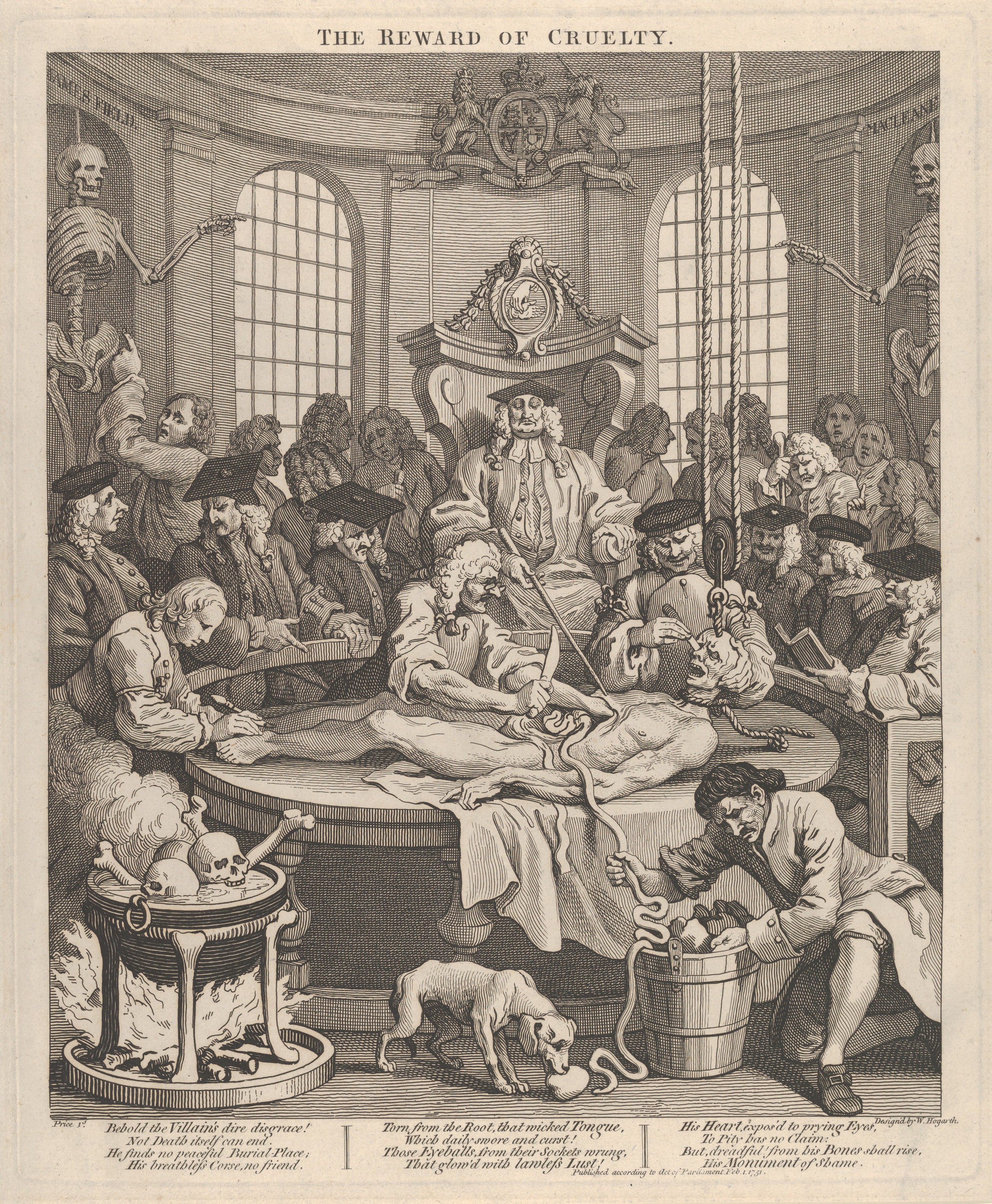 |
| “The Reward of Cruelty” by William Hogarth |
The post considers activism within the artistic community both historically and contemporarily. This interests me greatly as I am guided by my own morals and activism when creating my artwork, as returning visitors to this blog must surely know.
Friday, January 2, 2015
Mixed Media Monotypes
 |
| 'Hit' mixed media and ink monotype. ©2014, Elana Goren. All Rights Reserved. |
Conte crayons, charcoal and pastels work really well as drawing mediums on top of monotypes whether they are oil or water-based. Using these mediums adds another dimension to your print and allows the flexibility to enhance or change the initial drawing that is part of the monotype.
Please see previous posts for reference about how to create water-media (watercolor) based monotypes.
Saturday, November 29, 2014

Sunday, November 2, 2014
Not My Usual Post
 |
| Cup and Saucer Vine bud(s) Photo was taken Nov. 1, 2014 |
This is completely unrelated to printmaking but something I wanted to share just the same...
__________________________________________________________________________
I am not the most experienced or accomplished gardener, but this year I had some successes with seeds planted last March, indoors on a make-shift, grow-light shelving unit that I set up for seed starting. The frost-free dates in my area are in mid-May and if I wait that long to plant seeds, it will be frosty again before I see alot of the plants mature.
The photos shown are of cup and saucer vines planted from seed, indoors in March. Even with their early starts this year, they didn't flower until early October. This may be because my gardening skills are lacking or maybe it's normal for the plant to take so long to mature enough to flower, but when it did finally flower, it did so spectacularly. And it nicely covers my deck railing bringing a natural softness to the straight lines of the wood slats. I planted it as a hummingbird plant but since the flowers bloomed after the hummingbirds were long gone, it ended up being a mid-Fall late bloomer after all the other (perennial) plants were way past their blooming times.
The other annual plants that I have for the hummingbirds are still flowering: Cigar plant, Butterfly Deep Pink Pentas and a Bahama Firebush. These were all potted and brought inside with hopes of successfully overwintering them indoors while the snow falls outside. While they were outside living on my deck and in my side garden, they fed the hummingbirds so well, that the birds were fighting over the garden on a daily basis.
Here are a couple of more photos (below) of my Cup and Saucer Vine. I shot these yesterday, worried that if I waited any longer, the impending freeze that will visit us any day now will kill the plant before I have a photographic record of it's beauty.
 |
| Cup and Saucer Vine |
 |
| Cup and Saucer Vine |
Monday, October 13, 2014
Upcoming shows
 |
| Dark Side of the Road Aquatint Etching, © Elana Goren |
October 26 - November 8, 2014
NY Society of Etchers
Intaglio Prints New York/Melbourne
Reception: October 30, 6-8 PM
National Arts Club
15 Gramercy Park South
New York, NY
October 29 - December 10, 2014
SIPMA Juried Exhibition
"I Live Here"
Reception: October 29, 4:30-7:30 pm
Harold B. Lemmerman Gallery
New Jersey City University, NJ
See the calendar side bar on the right for more info.
Subscribe to:
Posts (Atom)