Saturday, March 17, 2012

Another Watercolor Monotype Experiment

For the Rodeo
Watercolor Monotype, ©2012, Elana Goren

This is the plate for a monotype where I had experimented with not putting gum arabic on the plate in the area above the horse's head. Every thing else went onto a gum arabic layer on the plate. When I printed this, only the thickest paint printed on the top (uncoated) part but most of the paint didn't transfer much at all. This is how I learned that precoating the plexiglass with gum arabic is a crucial step in this process (see last post for more info). I don't have a picture of the print at the moment but I will post it when I do.

UPDATE: Here is the 1st print from this plate. As you can see, the color above the horse's head is mostly lost.
For the Rodeo
Watercolor Monotype, ©2012, Elana Goren

And this is the ghost print (2nd print from same plate) in which I added more color to the plate before printing it again, as well as a charcoal drawing to the print.

Swallowed
Watercolor Monotype and Charcoal, ©2012, Elana Goren


Friday, February 24, 2012

Watercolor Montoypes

"Anticipating Death"
watercolor monotype, ©2012 Elana Goren

"Shooting Victim"
ink and pastel on paper, ©2012, Elana Goren


I have been experimenting using different types of water-based media with the new-to-me process of creating watercolor monotypes. There's been a lot of trial and error and really just seeing what effects I can get with this way of working. It is very different from using oil-based inks to produce monotypes and I'm pretty thrilled with the unique effects and vibrancy that I can get with this process.

As I was taught by a fellow artist at the Robert Blackburn Printmaking Workshop this past winter, I start by coating the plexiglass plate with gum arabic and then I buff it in with a dry cheesecloth. I believe that this helps the media release from the plate onto the paper when it goes through the press (but that's just conjecture on my part). I let the gum arabic dry and then begin applying the media (watercolor paint, non-waterproof ink, water-soluble dyes, pigment, etc) to the plate in various ways. Once the media is dry, I run the plate through the press with dampened printmaking or watercolor paper. The damp paper reconstitutes the dried media and allows it to transfer.

The first print above was created using watercolor paints and Dr. Martin's Hydrus liquid watercolor which has some pretty intense colors. The second print was created with Higgins non-waterproof ink (which may be fugitive--I'm not sure) and pastel pigments applied both directly and with a wet brush.

I hope to post more of these as I become a little more comfortable with the process.

UPDATE: Gum arabic definitely needs to be buffed into the plexiglass plate before you apply watercolor. An accident experiment proved how watercolor will not release well when printing if gum arabic is not applied.

Sunday, February 19, 2012

Carrier Pigeon show


Lab AnimalMonotype, ©2010, Elana Goren

Carrier Pigeon Magazine is releasing it's fifth issue and is having an exhibition celebrating the release at Grit N' Glory on Orchard Street in NYC from February 23 until March 1. The above print will be included in the show. You can see more of my work in Carrier Pigeon Issue 4, available here.

Coming soon:
I plan to share some of my latest experiments with watercolor monotypes.

Saturday, November 26, 2011

Robert Blackburn Printmaking Workshop


I do most of my etching work at the wonderful Robert Blackburn Printmaking Workshop (RBPMW) on 39th street in NYC. The top photo is me at RBPMW working on one of my latest etchings. The photo underneath is also at RBPMW and shows a view of two of the Charles Brand presses, artist Beth Sutherland working on one of her etchings, and beyond her is the aquatint box and door to the acid room.

Over at Tom Cathey's blog he has a post about his visit to RBPMW which features shots of the workshop, including one of Beth's prints in the drying rack and a photo of me describing my process to botanical artist, Mindy Lighthipe and artist, Patricia Wynne. It was a pleasant surprise to see Mindy there as I hadn't seen her since my days at the botanical garden in 2003, training to become a botanical illustrator (a short-lived dream of mine back then).

Friday, November 25, 2011

The Fine Art of Polemic Politics

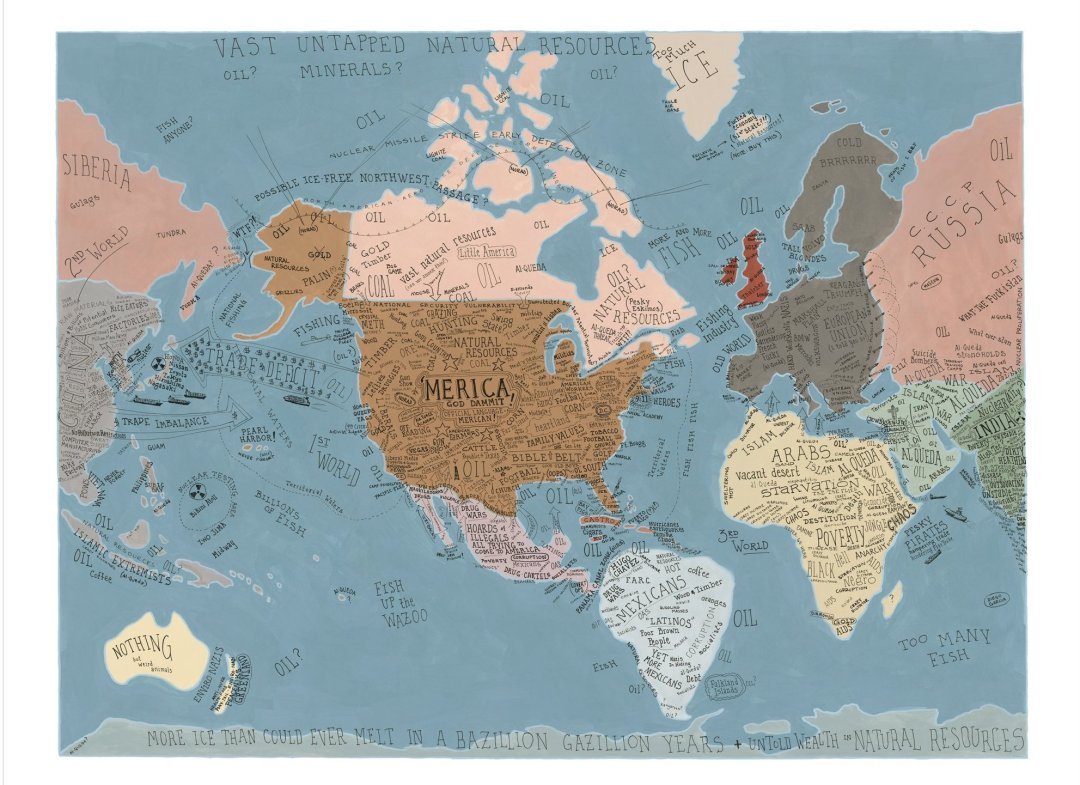
"Title Page" Sandow Birk first came to my attention a few years ago when I was introduced to his woodcut series, The Depravities of War, in a book by the same name.

 I just read an article about a new project where he and his wife, artist Elyse Pignolet created two maps of the world, one from an American, politically conservative point-of-view and another from an American, politically liberal point-of-view. I had a few chuckles reading their maps.

Here's a link to the article I saw online at the Huffington Post. And also there's a great post about it over at the New American Paintings blog.


Sunday, November 6, 2011

Carrier Pigeon Magazine

"Scream"
Monotype, © 2010, Elana Goren

My work (including the monotype, "Scream" seen above) is featured in the current issue of Carrier Pigeon Magazine which is celebrating its 1st Anniversary! Stop by the reception for the 1st anniversary exhibition on November 18th (see detailed info above) and check out this beautifully crafted magazine and some of the original works that have been featured in Carrier Pigeon during this past year.

Friday, October 7, 2011

White Ground Experiment

Cattle Car
Etching, 9" x 6"  © 2011, Elana Goren


This was a test plate where I mixed different techniques together to see what effects I could get: strong hatched lines mixed with the crayon aquatint as well as white ground effects. I usually don't do alot of crosshatching and rarely combine this with my usual aquatint tonal shading but since I was experimenting here I wanted to see what would happen. The jury is out on whether I want to do more with it, perhaps if the subject/composition dictated more expressive hatched linework, but for now I am much more interested in what happened with the white ground.

I used alot of water when applying the white ground. In fact, I wet the areas on the plate where I wanted to apply the white ground and then let the ground swirl around in the water as it was drying. I had to let go of any notion of control over where the ground will be thickest and thinnest in the watery swirls but I found this to be a general feature of white ground that I like, yielding results that are surprising, unexpected. The resulting smoky, hazy atmospheric effect came from repeated applications of the white ground in the same manner in between etches.

White ground is a bit tricky, there are so many factors involved in how it will yield results you are looking for. The formula used to create it will determine if it's more pigment-heavy or more soapy which in turn determines how it responds to water and after plate application, to the acid itself. I used a recipe from the book Etching, Engraving and Other Intaglio Printmaking Techniques, by Ruth Leaf. It's a great recipe for ground that can be stored in a jar and activated easily with a wet brush each time you need to use it. 

If you are interested in white ground or any other etching techniques, please let me know if you have any questions or comments. I am still experimenting with white ground and I welcome insights from others who have used this. I hope to post more about it in the future as well.